
WELCOME BONUS 100%
UP TO €500 + FREE
BET
UP TO €500 + FREE
BET
Home → Blackjack
Blackjack at Melbet: Variants, Rules and Payouts
Latency under 2 seconds at the live table
Infinite Blackjack by Evolution offers a latency metric that typically remains under two seconds for card dealing, ensuring that the visual update aligns with real-time action. This speed is critical for players relying on split-second decisions, as any delay could disrupt the flow of the game and affect strategic execution during high-stakes rounds. The provider utilizes advanced streaming technology to maintain this consistency across all connected devices, regardless of geographic location or network conditions.
The Quantum Blackjack Plus Live variant from Playtech introduces quantum multipliers up to 1000x on three-card combinations totaling 21 points, which can significantly alter payout speeds. While the standard deal latency is similar to other live tables, the instant application of these multipliers changes the effective return time for winning hands. Players should note that the RTP for this specific title stands at 99.57% when optimal strategy is employed, influencing long-term expectations.
Standard RNG tables often process outcomes instantly due to their digital nature, whereas live dealer games like Infinite Blackjack involve physical cards and human dealers. The comparison highlights that while RNGs offer immediate results, live tables provide a social element with slightly higher latency but greater transparency. The betting range for Infinite Blackjack spans from 1 to 5000 EUR, accommodating both casual players and high rollers seeking fast-paced entertainment.
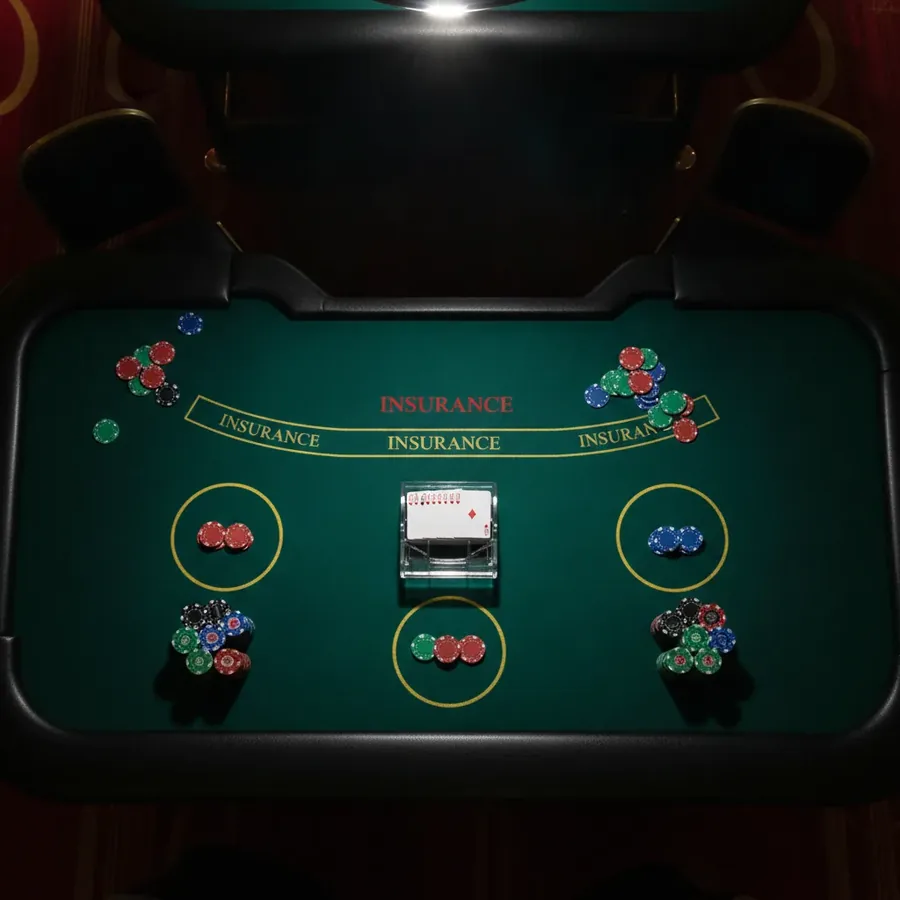
Insurance vs Even Money on Own Blackjack
Blackjack Insurance is a side bet available in games using six to eight decks, paying out at odds of 2:1 if the dealer reveals a natural blackjack. This wager costs up to 50% of the original stake and carries a house edge of 7.47%, resulting in an RTP of 92.53%. Statistical analysis strongly advises against taking insurance unless the player is counting cards and the true count reaches plus three or higher.
Even Money is essentially an early payout of insurance offered when a player holds a natural blackjack and the dealer shows an ace. By accepting even money, the player guarantees a 1:1 return immediately, avoiding the risk of pushing if the dealer also has blackjack. This option effectively converts the insurance bet into a guaranteed profit, eliminating variance but reducing potential upside in non-dealer-blackjack scenarios.
The Liberal Vegas Strip variant allows for more favorable rules, including a house edge of just 0.28% and an RTP of 99.72%. In such low-edge environments, the value of insurance diminishes further because the baseline probability of dealer blackjack is lower. Players should compare the 7.47% edge on insurance against the near-zero house advantage of the main game to make informed financial decisions.
When evaluating these options, consider that early surrender can reduce the house edge by 0.08 percentage points, offering a better alternative to insurance in some situations. This rule allows players to forfeit half their bet after the dealer checks for blackjack, providing a mathematical exit strategy that insurance does not match.
Live Table vs RNG Table: Speed and Limits
RNG tables like Blackjack 6 Decks operate with a theoretical RTP of 99.54% and a house edge of 0.46%, determined by strict rules such as S17 and DAS. These digital games allow for rapid play cycles, often exceeding hundreds of hands per hour, compared to the slower pace of live dealer studios. The absence of human interaction enables faster decision-making and immediate resolution of bets without waiting for physical card distribution.
Live tables such as Blackjack Party by Evolution feature a betting range from 1.00 to 1000 EUR, creating a distinct limit structure compared to RNG variants. The presence of two moderators adds a social layer that inherently slows down the game rhythm, requiring players to adjust their bankroll management accordingly. This format appeals to those seeking engagement over speed, contrasting sharply with the solitary efficiency of computer-generated outcomes.
Infinite Blackjack by Evolution supports unlimited seats at the table, allowing multiple players to act simultaneously without affecting individual deal times. The betting limits here reach up to 5000 EUR, catering to high-volume players who require higher stakes than typical RNG games offer. This flexibility in table capacity and limits provides a hybrid experience between the speed of RNG and the authenticity of live dealing.
Comparing the two formats reveals that RNG games generally offer better RTPs due to optimized algorithms, while live tables provide transparency through physical cards. Players must weigh the desire for faster gameplay against the preference for visible dealer actions, considering how each choice impacts their overall session duration and potential returns.
Bet two percent of bankroll per hand
A conservative betting strategy suggests risking no more than two percent of your total bankroll on any single hand of blackjack. For example, with a €1000 bankroll, this method limits wagers to €20 per round, preserving capital during losing streaks common in games with a 0.46% house edge. This approach minimizes variance and extends playing time, allowing for more opportunities to capitalize on favorable statistical edges.
In contrast, high-limit live tables like Infinite Blackjack allow bets up to 5000 EUR, which can quickly deplete a small bankroll if the two-percent rule is ignored. A single €5000 loss represents a massive portion of most players' funds, highlighting the importance of proportional betting regardless of table limits. Adhering to strict percentage-based stakes ensures that even significant losses do not eliminate future playing capability entirely.
Side bets such as Insurance, which carry a 7.47% house edge, should be avoided or strictly limited within this framework to protect the core bankroll. Since insurance reduces overall expected value, allocating funds to it detracts from the primary game where the RTP is closer to 99.5%. Maintaining discipline in bet sizing helps players navigate the mathematical realities of casino games without succumbing to emotional spending.
Some variants like Quantum Blackjack Plus Live introduce multipliers up to 1000x, tempting players to increase stakes for larger payouts. However, the volatility associated with these features means that consistent two-percent betting remains safer for long-term sustainability, preventing rapid erosion of funds during dry spells.
Splitting costs double bet: plan budget
Splitting pairs in blackjack requires placing a second bet equal to the original stake, effectively doubling the amount risked on that hand. For instance, splitting a pair of tens on a €10 bet increases the total exposure to €20, impacting the overall bankroll management significantly. This mechanic necessitates careful planning, as repeated splits can rapidly escalate costs, especially in games allowing resplitting up to four hands.
Games like Blackjack 6 Decks permit doubling after split (DAS), which enhances strategic flexibility but also increases potential financial outlay. Each additional action, such as hitting or doubling on split hands, involves further bets that must be accounted for in the initial budget. Understanding these cost implications is crucial for players aiming to maintain control over their spending while maximizing the benefits of liberal rules.
Live tables such as Quantum Blackjack Plus Live may impose different constraints on splitting due to the nature of quantum multipliers and side bets. With betting limits ranging from 1 to 5000 EUR, players must ensure their budget accommodates the doubled bets required for splitting strategies. Failure to plan for these increased costs can lead to premature bankroll depletion, undermining long-term enjoyment and profitability.
The Liberal Vegas Strip variant offers a low house edge of 0.28%, making splitting a more viable strategy when executed correctly. However, the cumulative effect of multiple split bets still demands rigorous budget adherence, as each split doubles the immediate risk. Players should calculate potential maximum exposures before sitting down, ensuring they can withstand the financial demands of aggressive splitting tactics.
Blackjack variants at a glance
| Variant | Payout | House edge | Rule | Bet range |
|---|---|---|---|---|
| Blackjack Auszahlung 6:5 statt 3:2 (6 Decks) | 98.15% | 1.85% | Ersatz von 3:2 durch 6:5 fügt exakt +1.39 Prozentpunkte zum Vorteil des Casinos hinzu – stärker als jede andere Regeländerung. Bei $10 Einsatz zahlt Blackjack $12 statt $15. | Blackjack 6:5, Gewinn 1:1 |
| Blackjack Split / Double / H17 – Regel-Effekte | n.a. (Regel-Modifikatoren) | H17 +0.22 Prozentpunkte; RSA −0.08 Prozentpunkte; DAS −0.14 Prozentpunkte | Dealer Hits Soft 17 verschlechtert RTP um 0.22 Prozentpunkte; Resplit Aces verbessert um 0.08 Prozentpunkte; Double After Split verbessert um ca. 0.14 Prozentpunkte; 6 Decks statt 8 – ca. 0.02 Prozentpunkte. | Double – Einsatz ×2 mit einer Karte; Split – bis 4 Hände; Ass-Split meist mit einer Karte. |
| Blackjack Liberal Vegas Strip (liberale Regeln, 3:2) | 99.72% | 0.28% | Günstigste Regelkombination: S17 + DAS + Resplit + Late Surrender. Standardabweichung 1,15 | Blackjack 3:2, Gewinn 1:1 |
| Blackjack Surrender (Late Surrender) – Regel-Effekt | n.a. (Regel-Modifikator) | −0.08 Prozentpunkte | Spieler gibt Hand nach Dealer-Blackjack-Prüfung auf, verliert die Hälfte des Einsatzes. Verbessert RTP um ca. 0.08 Prozentpunkte. Early Surrender ist wesentlich wertvoller (bis −0.6 Prozentpunkte), aber extrem selten. | Rückzahlung 50% des Einsatzes |
| Blackjack Ein Deck, klassische Regeln, 3:2 | 99.85% | 0.15% | Weniger Decks = niedrigerer Vorteil; ein Deck gibt ca. −0.48 Prozentpunkte gegenüber 8 Decks. Oft durch 6:5 Auszahlung kompensiert. | Blackjack 3:2, Gewinn 1:1 |
| Blackjack 6 Decks, S17, DAS, DOA, Auszahlung 3:2, Basisstrategie | 99.54% | 0.46% | Dealer steht auf Soft 17; Verdopplung auf jeder Zweierkarte; Verdopplung nach Split erlaubt; keine Aufgabe. Basisstrategie ist für diesen Wert zwingend | Blackjack 3:2, normaler Gewinn 1:1, Insurance 2:1 |
Early Surrender is removed from many tables
Standard Blackjack variants often exclude Early Surrender, a rule that allows players to forfeit half their stake before the dealer checks for blackjack. While Early Surrender can reduce the house edge by up to -0.6 percentage points, it is extremely rare in modern online setups compared to Late Surrender.
Late Surrender remains available on some liberal tables, improving the RTP by approximately 0.08 percentage points by returning 50% of the bet after the dealer verifies their hand. This modest benefit contrasts sharply with the significant disadvantage introduced by other common rule changes found in standard packages.
The absence of Early Surrender forces reliance on basic strategy and other modifiers like Resplit Aces or Double After Split to mitigate the house edge. Players must adjust their expectations as these remaining options offer smaller advantages than the discontinued early exit option.
What Push Means: Stake Returns to You
A Push occurs when the player and dealer hold equal totals, resulting in the return of the original stake without any profit or loss. This outcome is distinct from winning, which pays at 1:1, or losing, where the entire wager is forfeited to the casino.
In games like Quantum Blackjack Plus Live, pushes are standard unless specific side bets or multipliers alter the base game dynamics. The base RTP of 99.57% assumes optimal strategy, meaning frequent pushes help maintain this high theoretical return over hundreds of thousands of hands.
Understanding Push mechanics is crucial because they do not contribute to variance in the same way as wins or losses. For live tables like Infinite Blackjack, knowing when a push triggers prevents confusion regarding bankroll management during long sessions.
Which rule variants does the software show?
Software providers display varying rule sets, such as Dealer Hits Soft 17 (H17) which increases the house edge by +0.22 percentage points. In contrast, rules like Double After Split (DAS) improve the RTP by roughly 0.14 percentage points, offering better value for strategic players.
Resplitting Aces provides a slight advantage of -0.08 percentage points, while using six decks instead of eight reduces the edge by about 0.02 percentage points. These small modifiers accumulate, making the difference between a 0.46% house edge in standard play and higher costs in restrictive variants.
Liberal Vegas Strip rules combine S17, DAS, Resplit, and Late Surrender to achieve a low house edge of 0.28% with an RTP of 99.72%. Comparing this to 6:5 payout tables reveals how rule selection drastically impacts the expected return per hour of play.
What Hole Card Means at a Live Table
Live dealer tables typically use a continuous shuffling machine or a shoe where the hole card is dealt face down until the player acts. This ensures that the dealer cannot check for blackjack before players make decisions like splitting or doubling down.
In contrast, some RNG versions may reveal the hole card immediately if the dealer shows an Ace, affecting insurance bets which pay 2:1 but carry a 7.47% house edge. Live streams prioritize transparency, showing the card only after all player actions are complete.
The timing of the hole card reveal directly influences strategy for side bets like Insurance, which should always be declined except when counting cards. This procedural difference maintains the integrity of the game flow in platforms like Evolution's Infinite Blackjack.
How many decks are in the shoe?
Most standard online blackjack tables utilize six decks, which increases the house edge compared to single-deck games due to reduced penetration and shuffle frequency. A single deck offers a lower house edge of 0.15% but is often paired with unfavorable 6:5 payouts that negate this advantage.
Six-deck shoes are standard in games like Quantum Blackjack Plus Live and Infinite Blackjack, balancing operational efficiency with fair odds. These configurations typically support higher betting limits, ranging from 1 EUR to 5,000 EUR per hand.
The number of decks affects the probability of drawing specific cards, influencing the effectiveness of strategies like resplitting or doubling. Players should note that more decks slightly increase the house edge, making rule variations like DAS even more critical for minimizing losses.
Ace Split: only one card per hand
The Ace Split rule restricts players to receiving exactly one additional card for each separated Ace, a standard constraint in Melbet's Blackjack 6 Decks variant. This limitation reduces the potential for creating strong hands compared to variants allowing multiple hits on split Aces. Consequently, the strategic depth decreases slightly, requiring strict adherence to basic strategy tables to maintain the optimal RTP of 99.54 percent.
Comparing this restriction to Liberal Vegas Strip rules reveals a significant difference in house edge calculations where Resplit Aces improves RTP by 0.08 percentage points. The absence of resplitting capability means players cannot recover losses as effectively when dealing with multiple Aces during high-variance sessions. This mechanical limitation directly impacts long-term expected value, making bankroll management more critical for consistent play outcomes.
Infinite Blackjack from Evolution offers unlimited table seats but maintains similar single-card restrictions on split Aces to manage risk exposure. Players observing Quantum Blackjack Plus Live will notice that multipliers apply to final hands, making initial split decisions even more crucial for maximizing payouts. Understanding these specific game mechanics ensures better preparation before engaging with real money bets at the virtual table.
What a Natural Blackjack Practically Pays Out
A natural Blackjack pays out at 3:2 odds, meaning a 100 Euro stake yields 150 Euro in winnings upon achieving the perfect two-card twenty-one. This generous ratio is standard in the primary Blackjack 6 Decks game available, providing the highest possible return for the most valuable hand combination. Players must ensure they select tables offering this rate rather than inferior 6:5 variants which drastically reduce overall profitability.
Switching to a 6:5 payout structure increases the house advantage by exactly 1.39 percentage points, turning a 100 Euro bet into only 120 Euro returns. This detrimental change makes the Liberal Vegas Strip variant with its 0.28 percent house edge significantly more attractive for serious gamblers seeking value. The financial impact accumulates rapidly over thousands of hands, eroding bankrolls much faster than standard rules would suggest.
Insurance side bets pay 2:1 if the dealer holds a natural, but rejecting them is always advised unless counting cards with a true count above plus three. Accepting insurance lowers the overall RTP to 92.53 percent due to the high 7.47 percent house edge inherent in this separate wager. Avoiding this trap preserves the base game's theoretical return and protects the player from unnecessary statistical disadvantages during play.
Double Down vs Simple Hit on 11
Doubling down on an eleven allows players to double their initial stake for just one more card, a powerful move when permitted against any dealer upcard. In the standard six-deck game, doubling after splits is also allowed, enhancing the flexibility of aggressive strategies during favorable situations. This option significantly boosts expected value compared to simply hitting, provided the dealer shows a weak upcard like four through six.
The DAS rule improves RTP by approximately 0.14 percentage points compared to games restricting doubling to only the initial two cards. Without Double After Split, players lose opportunities to capitalize on strong starting hands formed after splitting pairs, reducing overall winning potential. Analyzing these rule variations helps identify which specific table configurations offer the most advantageous conditions for strategic doubling maneuvers.
Evolution's Infinite Blackjack permits doubling on any two cards, maintaining the same aggressive potential found in traditional land-based casino environments. Players utilizing basic strategy charts will recognize that hitting eleven against a ten or ace yields negative expected value compared to the doubling option. Maximizing profits requires strictly following mathematical recommendations rather than intuitive guesses about card distribution probabilities.
Bust at 22: Stake Lost Immediately
Standard blackjack rules dictate that any hand exceeding twenty-one points results in an immediate loss of the entire original stake placed on the table. This fundamental mechanic applies uniformly across all variants including Quantum Blackjack Plus Live, where busting eliminates any potential multiplier bonuses entirely. Players must carefully manage their hit decisions to avoid crossing this critical threshold while chasing higher totals.
The house edge calculation for the main game relies heavily on this bust frequency, with the 0.46 percent advantage derived from statistical probabilities of going over twenty-one. Variants like the single-deck game offer a lower 0.15 percent edge partly because fewer decks reduce the likelihood of drawing cards that cause busts. Understanding these probability distributions helps players adjust their betting sizes according to the specific risks associated with each game type.
Live tables such as Blackjack Party maintain identical bust rules despite their entertaining atmosphere and dual moderator format, ensuring fair gameplay standards are upheld consistently. Players should note that side bets like Bust It have different win conditions but do not alter the core requirement of staying under or equal to twenty-one. Maintaining discipline during hot streaks prevents reckless hitting that inevitably leads to lost wagers regardless of previous successes.
What Peek Means with a Dealer Ace
When the dealer exposes an ace, they perform a peek to check for a natural blackjack before allowing players to make further decisions on their hands. If the dealer does not have blackjack, insurance bets remain active, but players must still decide whether to take insurance based on their own hand strength. This procedure ensures that players do not lose their original stakes unnecessarily when the dealer holds a winning natural combination.
Late surrender rules allow players to forfeit half their bet after the dealer checks for blackjack, improving RTP by roughly 0.08 percentage points. Early surrender, which is rarely available, offers even greater value by allowing forfeiture before the peek occurs, potentially saving up to 0.6 percentage points. Recognizing which variation is active at Melbet helps players adjust their surrender strategy accordingly to minimize long-term losses.
Quantum Blackjack Plus Live uses quantum multipliers on winning hands, but the initial peek process remains unchanged to determine dealer status first. Players must understand that taking insurance is statistically unfavorable unless they employ advanced card counting techniques with a true count of plus three or higher. Ignoring this advice leads to significant erosion of bankroll due to the high house edge associated with the insurance side bet.
Contact
Live - online chat
Banking









Providers












Melbet 2026